


Ancient Rome, reimagined for the wall
Roman Wall Decor Inspired by Ancient Rome
Roman wall decor draws on the painted walls of Ancient Rome: Pompeian red, ochre and soft green, figures from myth and daily life, and plaster that shows its age. Our prints reproduce frescoes and mosaics from Pompeii, Stabiae and Boscoreale, preserved under the ash of Vesuvius in 79 AD, for homes that want warmth and a sense of history without looking like a museum.
What defines Roman decor?
Roman decor is less about columns and marble busts than about painted walls. In a Roman house, almost every room was covered in fresco: large fields of flat color, framed by borders, painted architecture and small scenes of gods, gardens or daily life. Its signature is an earthy palette of reds, yellows, greens and black, mineral textures, botanical and mythological motifs, and a strong sense of symmetry. On a modern wall, that translates into artwork that feels textured, storied and calm.
The four styles of Roman wall painting
Archaeologists divide the wall paintings of Pompeii into four styles, first described by the German scholar August Mau in 1882. Knowing them helps you choose the kind of Roman wall art that suits your room.
- First Style (incrustation), 2nd century BC: molded and painted plaster imitating blocks of colored marble. Graphic and architectural.
- Second Style (architectural), 1st century BC: painted columns, balconies and open views that seem to push the wall back, as in the Villa of the Mysteries or our woman on a balcony.
- Third Style (ornate), late 1st century BC to mid 1st century AD: flat walls in black, red or white, with delicate ornaments and a small central picture. The most minimal of the four, and the easiest to live with today.
- Fourth Style (intricate), mid 1st century AD to 79 AD: a rich mix of the earlier styles, with mythological panels set among architectural fantasies. Much of what visitors see in Pompeii today belongs to it.
Roman atmosphere
How to use Roman wall decor at home
Ancient Roman inspiration works best as atmosphere rather than costume. You don't need marble columns or heavy furniture: a single fresco print on a plain wall, with natural wood, linen and stone tones, is enough to give a room structure and warmth. Hang one large piece as a focal point, or pair two frescoes side by side, the way Roman painters set pictures within a wall.
In a living room
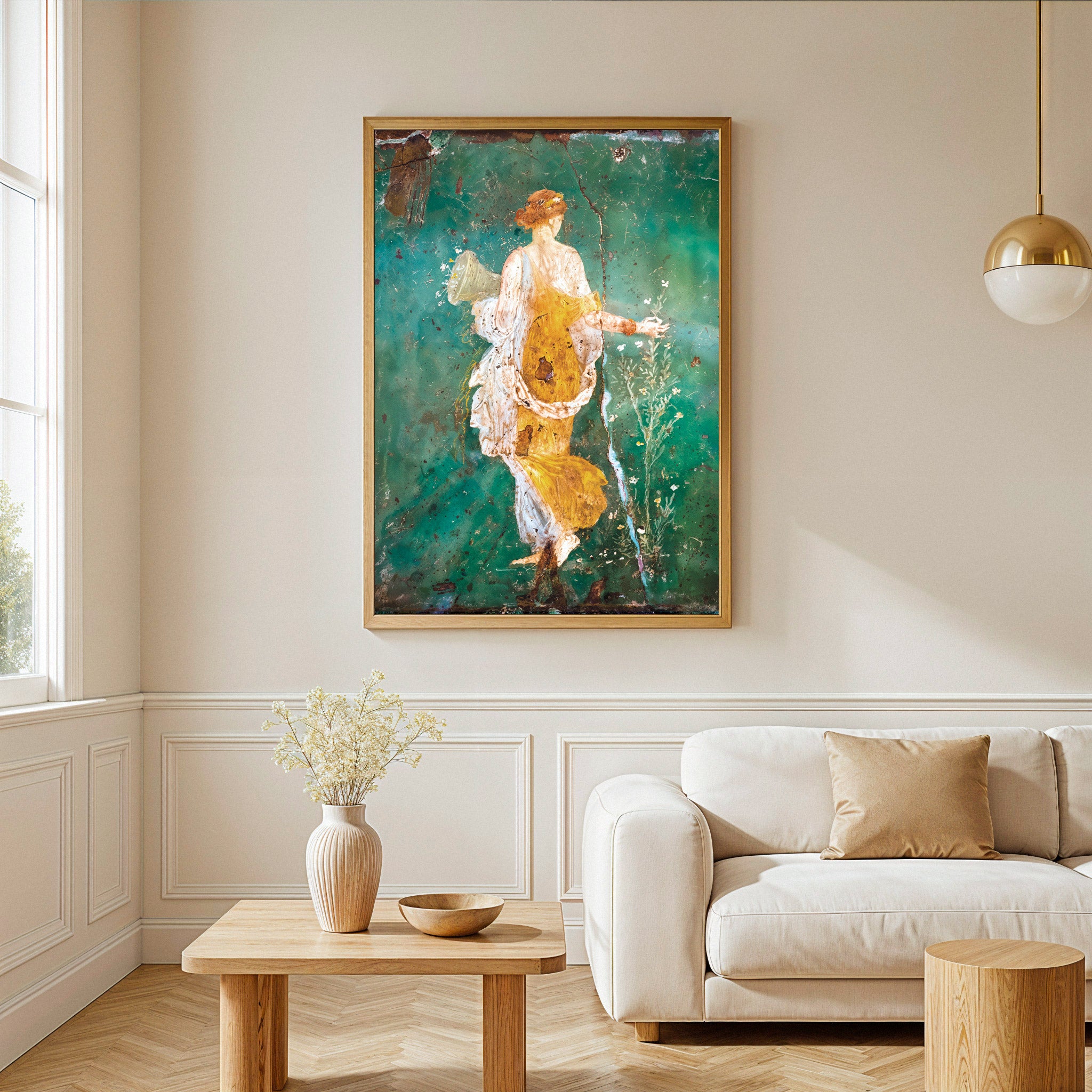
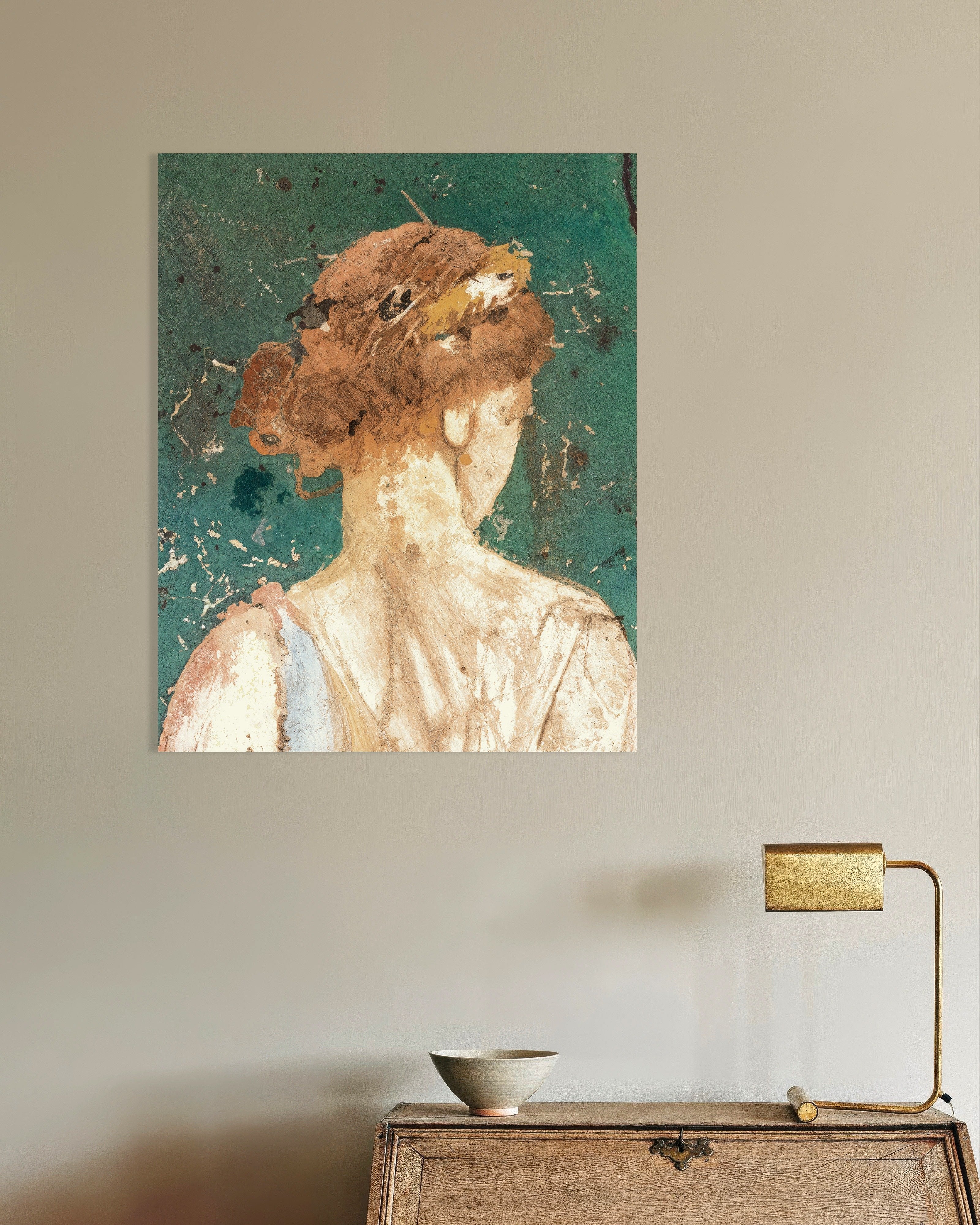
A large fresco print above the sofa anchors a room built around limestone tones, natural wood and soft beige textiles. Figures like Flora of Stabiae, gathering flowers on a green ground, bring calm rather than drama.
Living room wall artIn a dining room
Romans decorated their dining rooms with still lifes of fruit, fish and wine, painted to welcome guests. A fruit bowl fresco or a mosaic of sea creatures keeps that spirit, in ochre, clay and muted green.
In a bedroom
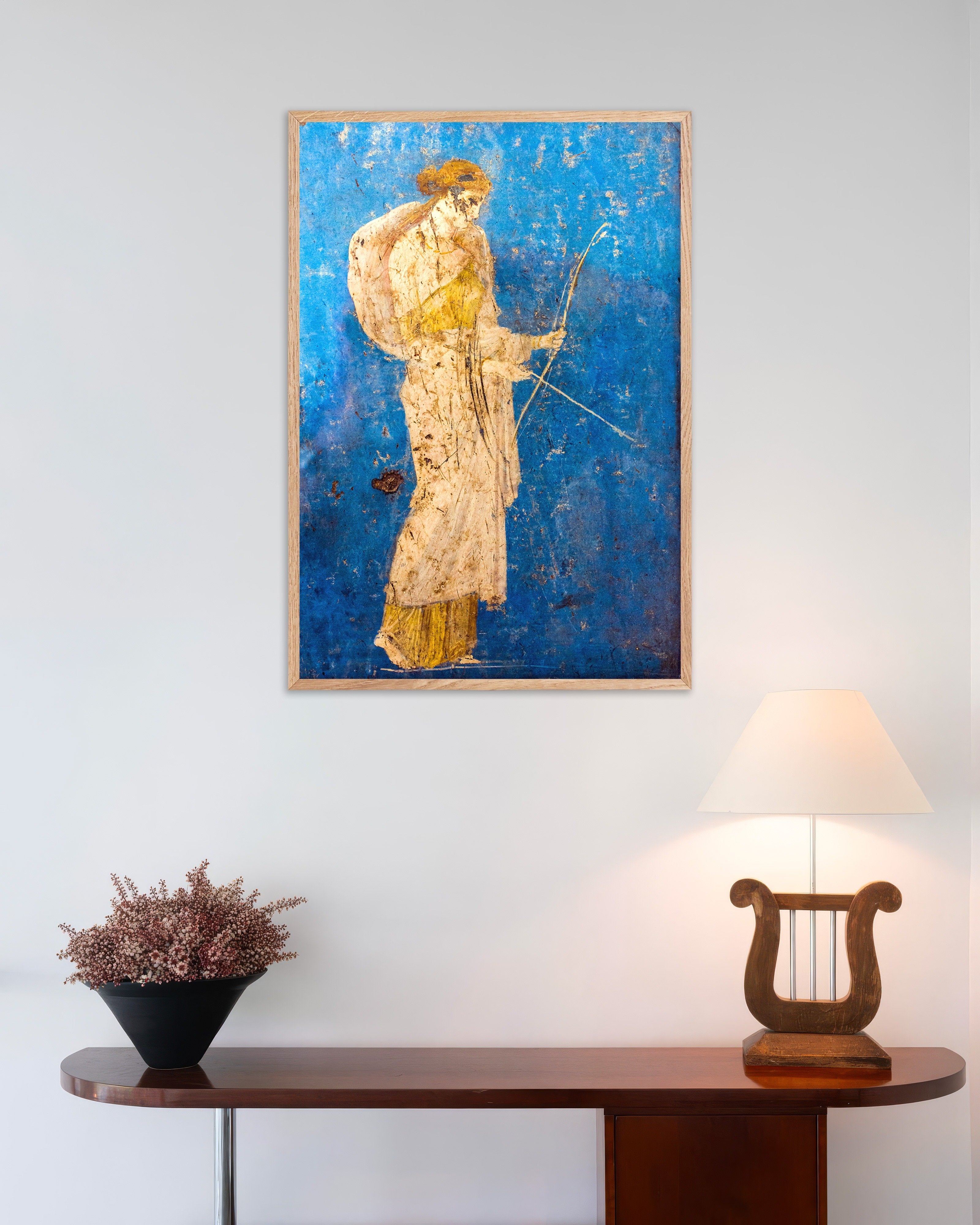
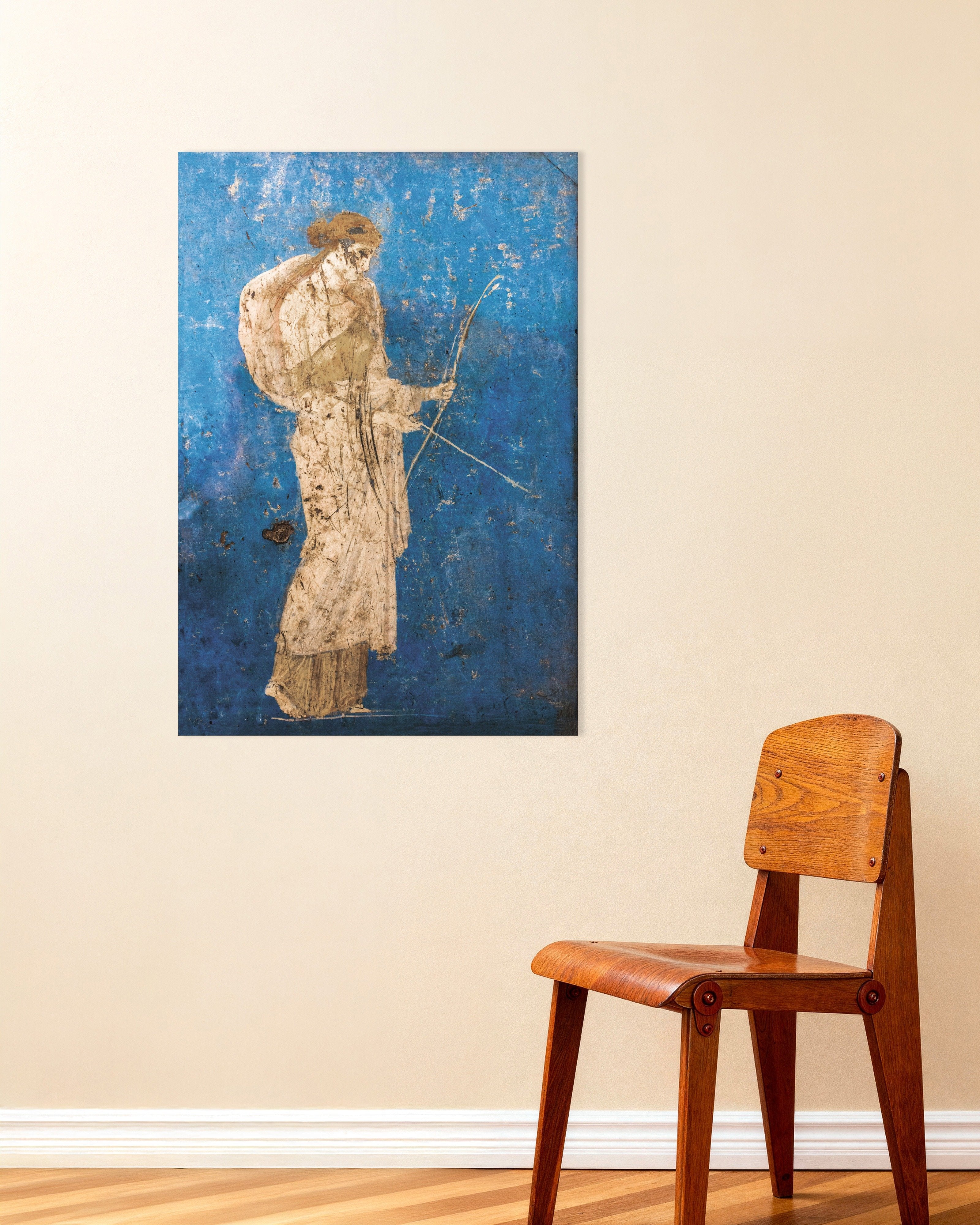
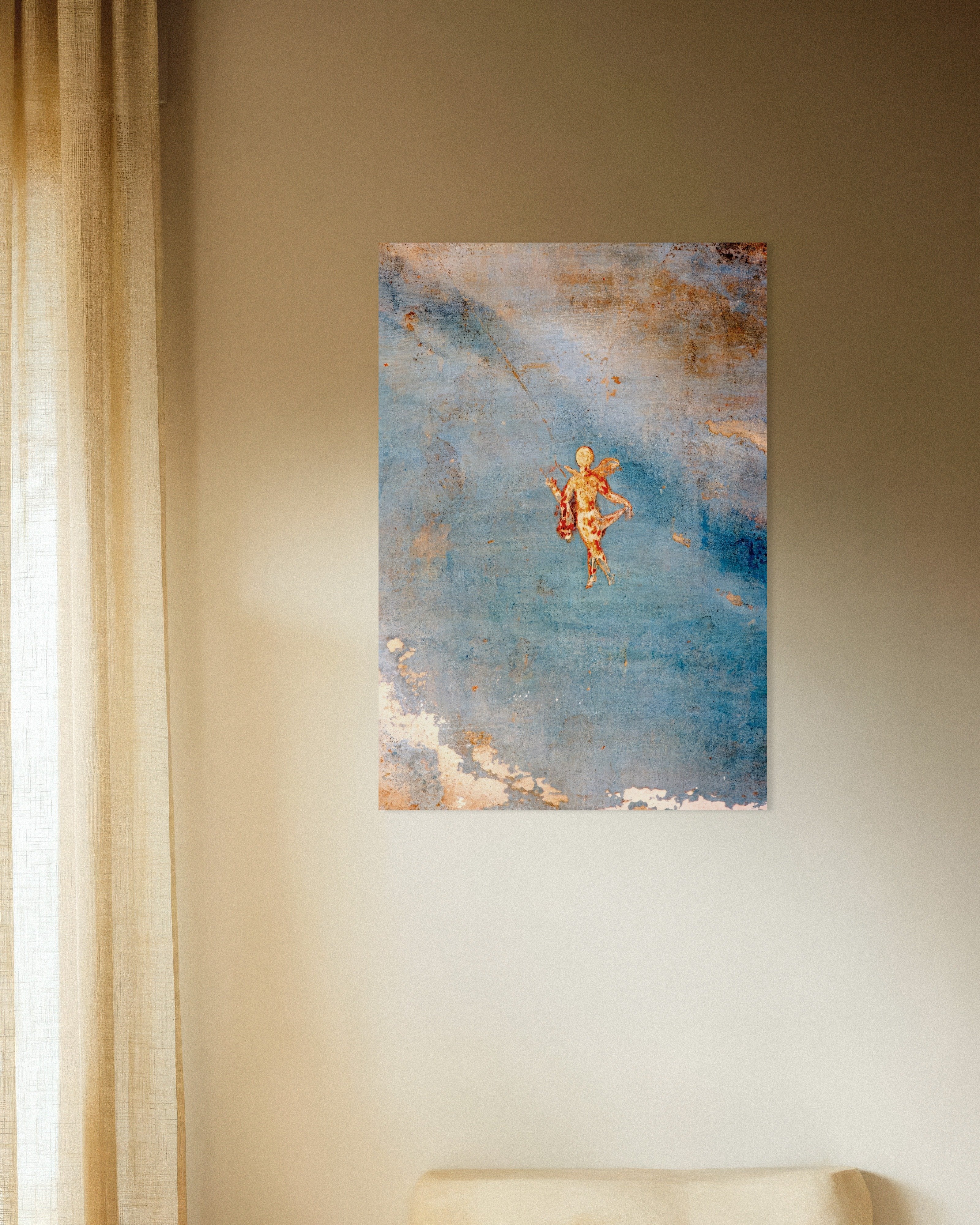
For a bedroom, choose softer images: weathered surfaces, draped figures and faded pigments rather than busy scenes. Psyche on blue, from the House of Venus in Pompeii, keeps the room quiet and luminous.
Bedroom wall artIn an office or studio
Classical wall decor brings structure without coldness to a study full of books, dark wood and stone tones. The so-called Sappho, a young woman holding a stylus and wax tablets, is a natural companion for a desk.
Office wall art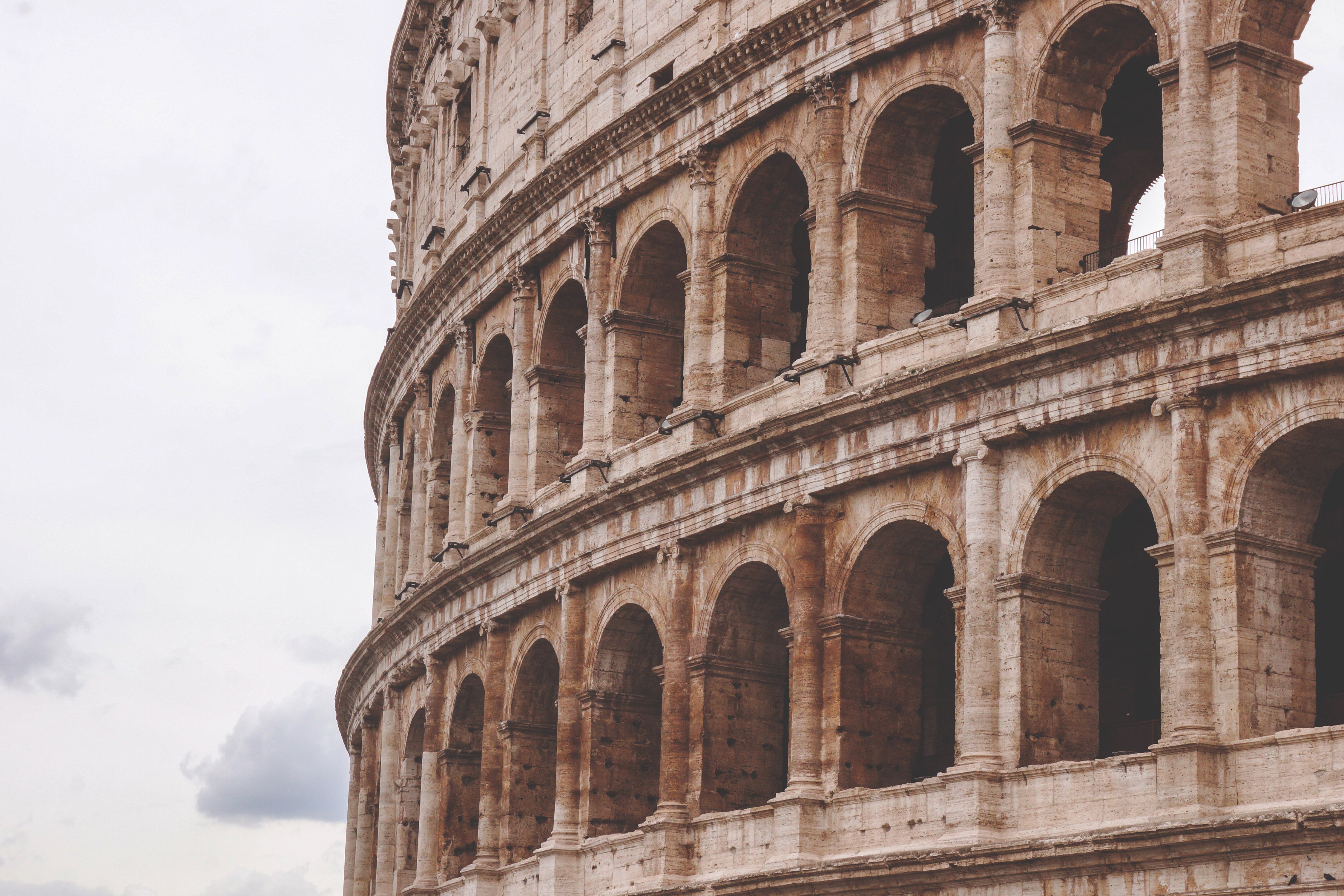
Why Pompeii frescoes matter in Roman wall decor
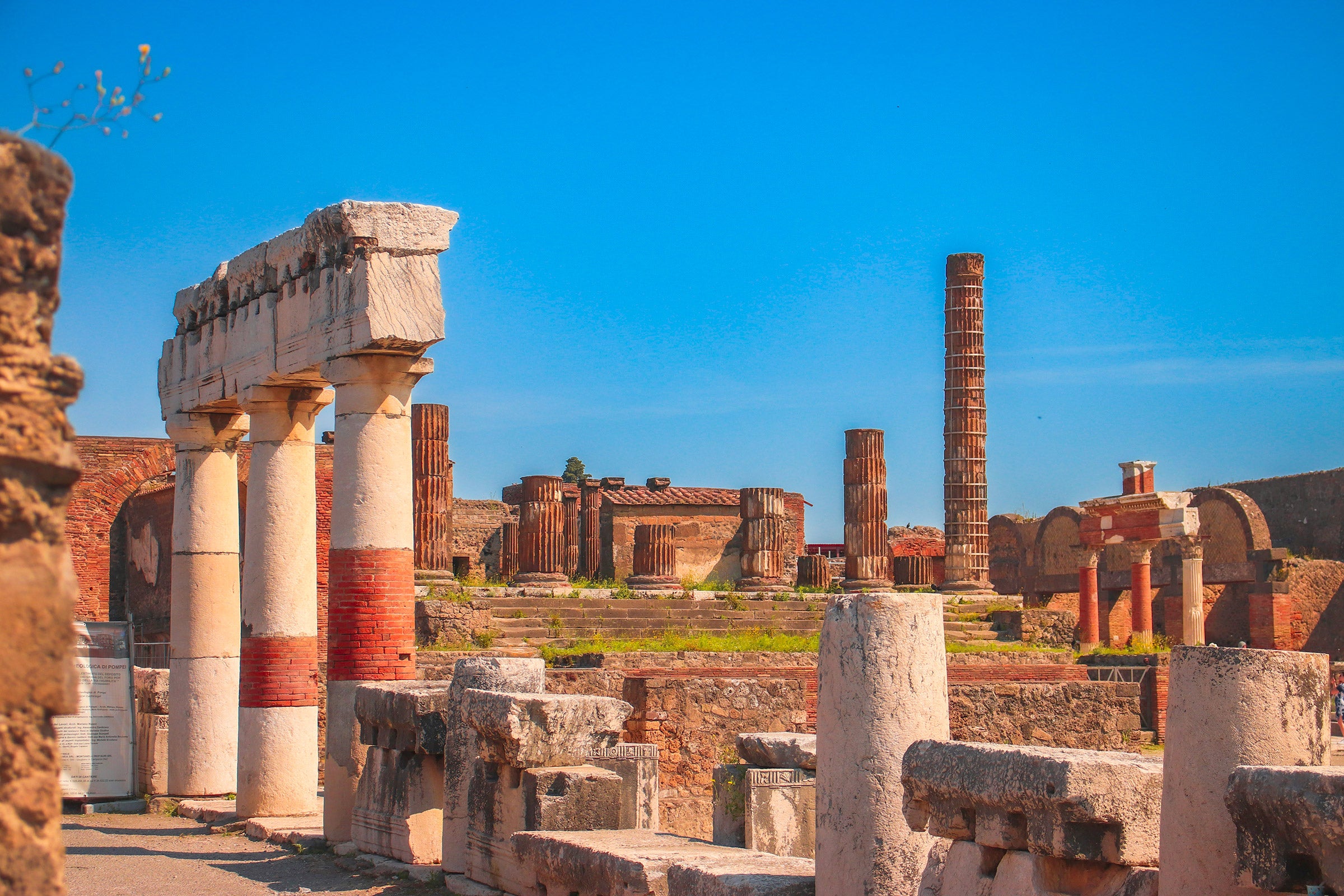
Most of what we know about Roman wall painting comes from the towns buried by Mount Vesuvius in 79 AD. Ash sealed Pompeii, Herculaneum and the seaside villas of Stabiae, and preserved their painted rooms for almost two thousand years. Many of these frescoes now hang in the National Archaeological Museum of Naples, while others, like the cycle of the Villa of the Mysteries, are still in place in Pompeii. Together they show how Romans used color, ornament and illusion in the rooms they lived in.
To see the artworks we reproduce from these sites, visit our Pompeii collection.
Roman interior inspiration
Shop Roman inspired wall art
Our Roman wall art brings together frescoes and mosaics from Pompeii, Stabiae and Boscoreale, printed on museum-quality archival paper. Each print is available unframed or in a metal, white wood or natural wood frame: you only pay for the frame, the framing itself is free. Natural wood suits the warm ochres of Pompeii, white wood keeps pale frescoes light.
Pompeii Eternal








The colors of Ancient Roman interiors
Roman rooms were far more colorful than the white marble of later imagination. Walls were painted in Pompeian red, yellow ochre, black and soft green, with touches of Egyptian blue, one of the first synthetic pigments. Researchers have even shown that some of Pompeii's famous reds were originally yellow, darkened by the hot gases of the eruption. To bring that mood home, choose wall art that feels layered and slightly weathered rather than polished.
- Color palette: Pompeian red, terracotta, yellow ochre, olive green, warm ivory, mineral black
- Textures: plaster, travertine, linen, patina, aged pigment
- Materials: natural oak, walnut, terracotta, brass
- Mood: grounded, elegant, quiet, storied
From ancient frescoes to contemporary interiors
Roman wall decor has lasting appeal because it sits between art, architecture and decoration. Fresco fragments, painted figures and ornamental details still feel at home in modern spaces because they carry both an image and a material presence: they don't just decorate a wall, they suggest a larger world behind it. For the history of these paintings and the stories behind our favorite figures, read our article on Pompeii frescoes.
Ancient Roman decor for walls with character
Roman decor sits easily alongside other styles because its colors are earthy and its compositions restrained. A Pompeian fresco works next to beige and neutral prints in a minimal room, picks up a terracotta sofa or a red accent wall, and gives a gallery wall a sense of time beside architecture prints or other classic painting reproductions.
At Posterscape, our Roman inspired wall art comes from the visual world of Pompeii and Roman mural painting. Rather than treating antiquity as a theme, we choose pieces whose textures, tones and figures fit naturally into contemporary homes: refined without being formal, historical without feeling distant.
Roman wall decor: frequently asked questions

